Mobile App Features That Enable Seamless Shifts Between Virtual Table Games and Live Event Wagering
Otto Wagner · Jun 30, 2026
Mobile App Features That Enable Seamless Shifts Between Virtual Table Games and Live Event Wagering
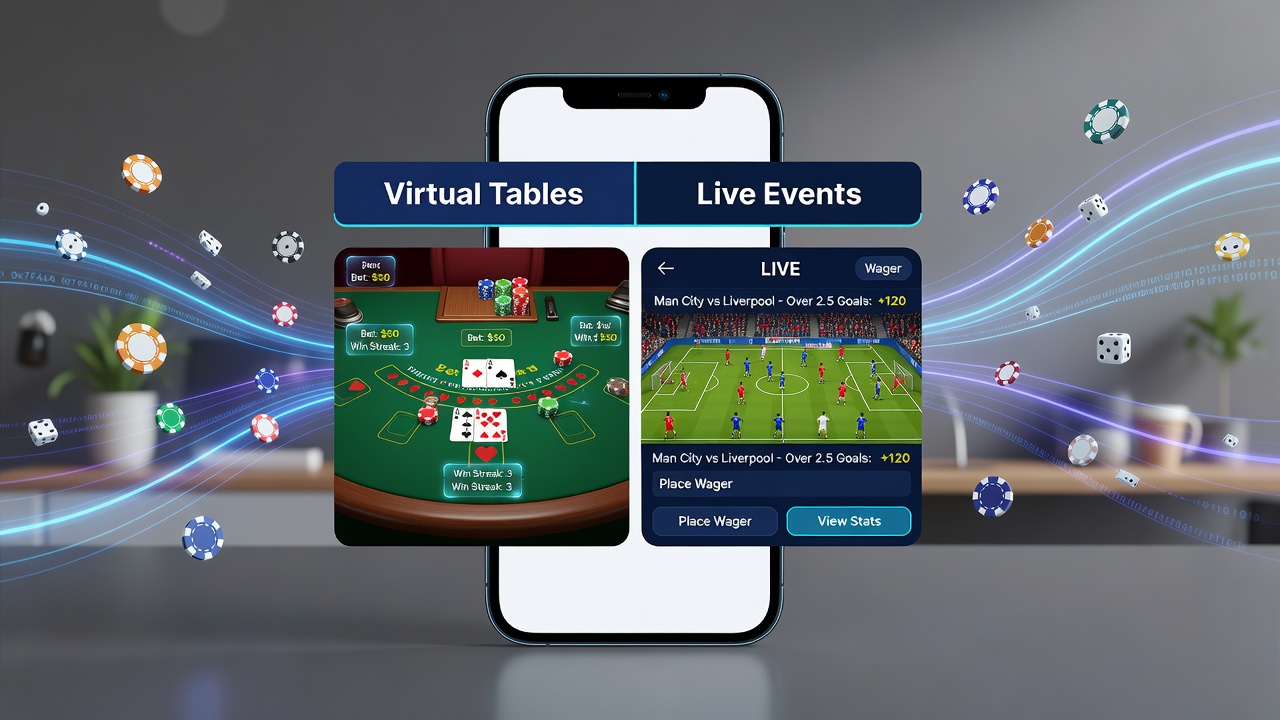
Integrated mobile platforms now combine virtual table games such as blackjack and roulette with live event wagering through shared account systems and synchronized interfaces that reduce the steps required to move between activities. Operators design these systems so that a single login grants access to both casino-style tables and sports markets while a unified wallet handles deposits, withdrawals, and balance transfers without separate verification processes.
Unified Account and Wallet Structures
Research from the American Gaming Association indicates that platforms using centralized player profiles cut session-switching time by connecting casino and sports sections directly. Users maintain one balance that updates across virtual tables and live odds feeds, and transaction histories appear in a single ledger that regulators in multiple jurisdictions review for compliance.
Figures released in June 2026 by several state gaming commissions show continued growth in these integrated accounts, with operators reporting higher retention rates when players can alternate between spinning a roulette wheel and placing in-game football wagers without logging out or re-funding.
Interface Design and Navigation Tools
App developers incorporate persistent navigation bars and gesture-based controls that allow instant movement between sections. A player viewing live dealer blackjack can swipe or tap a tab to open basketball spreads while the table remains visible in a minimized window, and real-time data streams keep both activities updated simultaneously.
Push notifications alert users to changing odds or table seat availability, drawing attention to the alternate activity without interrupting the current game. Split-screen modes on larger devices display dealer video feeds next to scoreboards, and quick-add buttons let users place sports wagers using chips already allocated at a virtual table.
Real-Time Data Synchronization and Streaming
Live event data integrates with table game engines so that odds updates appear alongside card outcomes without lag. Operators employ APIs that pull from multiple sportsbooks and casino servers, ensuring that a goal in a soccer match registers instantly while a roulette spin continues uninterrupted.
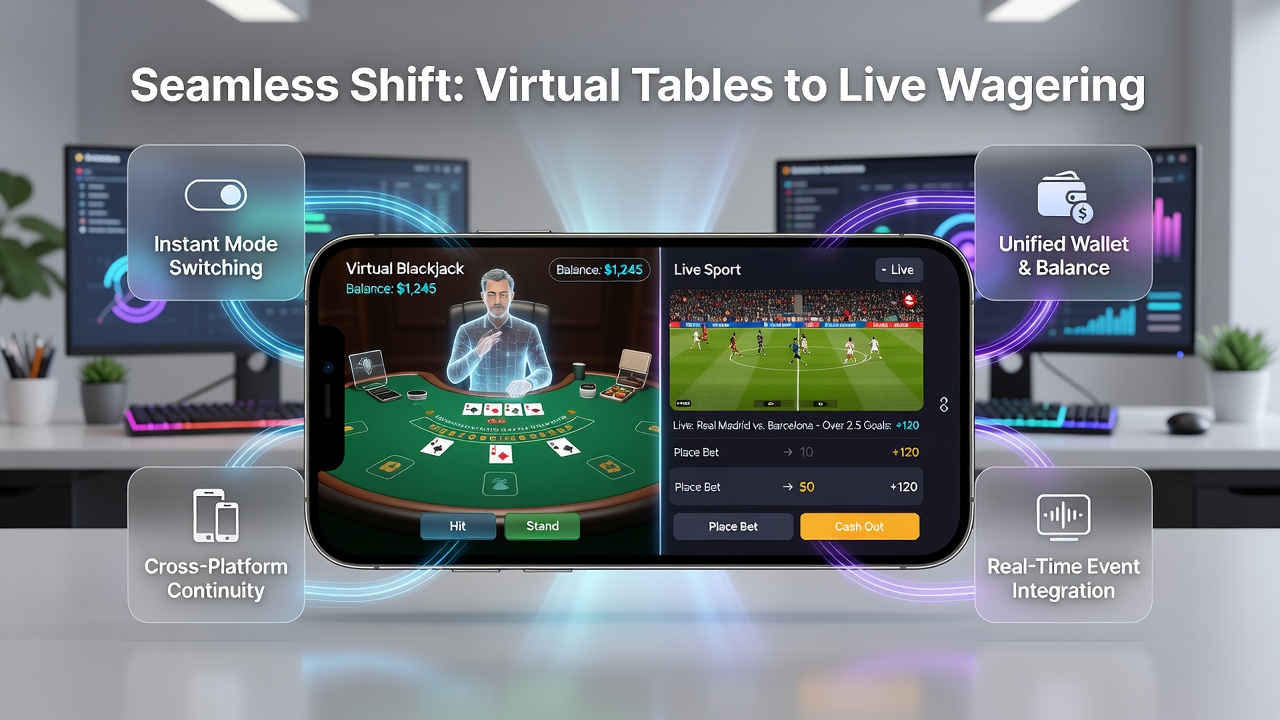
Streaming capabilities extend to both dealer cameras and event broadcasts, allowing users to watch multiple feeds through picture-in-picture windows. Industry reports from the European Gaming and Betting Association note that these synchronized streams reduce the need for external apps and keep activity within regulated environments.
Cross-Activity Promotions and Reward Systems
Promotional engines link table game play to sports outcomes through conditional bonuses that activate when certain thresholds are met in either category. A player completing a set number of blackjack hands might receive an odds boost on an upcoming tennis match, and the system tracks progress across both environments in real time.
These mechanisms rely on shared loyalty ledgers that accumulate points regardless of which section a user occupies at any moment. Regulatory frameworks in Nevada and several Canadian provinces require clear disclosure of how such offers function, and operators publish the rules within the app so participants understand eligibility conditions before accepting rewards.
Security and Compliance Features
Multi-factor authentication and device-binding protocols protect accounts that span casino and sports sections. Session tokens refresh automatically during switches, and encryption standards apply uniformly to both table game transactions and live betting activity. Compliance teams monitor cross-platform behavior for patterns that trigger responsible gaming interventions, such as extended play across multiple product types.
Observers note that these layered safeguards help platforms meet requirements from diverse regulatory bodies while maintaining the fluidity users expect from modern applications.
Conclusion
Mobile applications continue to evolve the technical connections between virtual table environments and live event wagering through integrated accounts, responsive interfaces, synchronized data, and coordinated reward structures. Data collected through June 2026 reflects ongoing adoption of these capabilities across regulated markets, and developers refine the underlying systems to support faster transitions while adhering to jurisdictional standards. The resulting platforms allow participants to move between game types with minimal friction while operators maintain oversight of all activity within a single ecosystem.