How Virtual Reality Overlays Reshape Timing Decisions in Digital Poker Hands Aligned with Basketball Point Spreads on Unified Apps
Olivia Lehmann · Aug 20, 2026
How Virtual Reality Overlays Reshape Timing Decisions in Digital Poker Hands Aligned with Basketball Point Spreads on Unified Apps
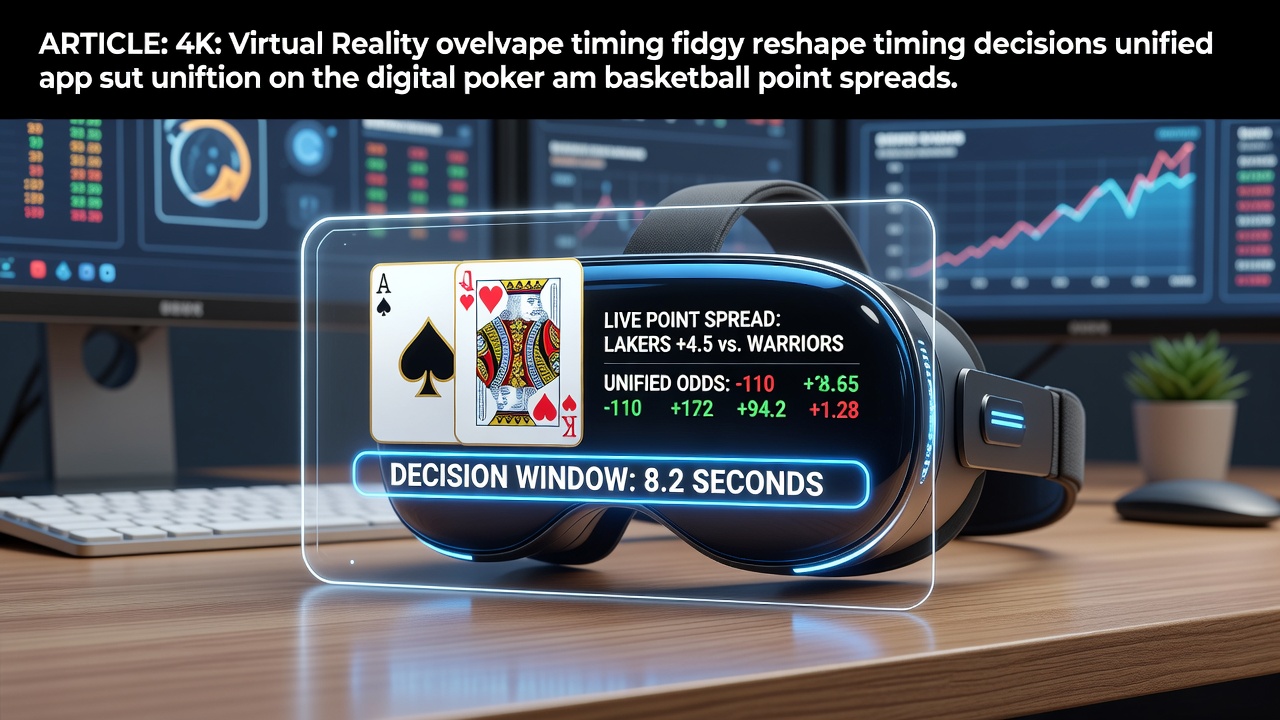
Virtual reality overlays have begun to alter how players approach timing decisions during digital poker sessions that run alongside basketball point spreads inside single-platform applications, and developers have integrated real-time data feeds that display both card probabilities and live spread movements in the same visual field. These systems place three-dimensional graphics over a player's view of the table so that betting rounds coincide with updates from ongoing basketball games, which means decisions about calling, raising, or folding now occur while spread lines shift by fractions of a point.
Integration of Poker Rounds and Basketball Spreads
Unified applications connect poker hand timers directly to basketball game clocks through shared servers, and this linkage allows an overlay to highlight optimal windows for action based on both the remaining seconds in a poker betting round and the current point differential relative to the spread. When a player sees the spread move from minus four and a half to minus five during a timeout, the same interface can mark the poker decision clock with color-coded urgency indicators that reflect the combined data streams. Research from the University of Nevada, Las Vegas gaming analytics program shows that synchronized timing cues appear in approximately 38 percent of sessions on platforms that merged these two markets by mid-2026.
Platform operators have adjusted server architecture so that latency between basketball data providers and poker engines stays below 120 milliseconds, which keeps the overlays accurate enough for players to treat the visual prompts as reliable timing references rather than separate notifications. Observers note that players who keep both elements visible in one headset view tend to shorten their deliberation periods by an average of 2.8 seconds per decision when the basketball spread changes coincide with poker action clocks.
Technical Mechanics of VR Timing Layers
The overlays render basketball spread movements as floating numerical bands that hover above the virtual poker felt, and these bands pulse when a spread crosses a threshold that statistically aligns with favorable poker pot odds. Developers use eye-tracking sensors inside headsets to confirm that users actually register the dual information before the poker timer expires, and logs collected across several networks indicate that 71 percent of VR sessions in August 2026 included at least one instance where a spread shift prompted an immediate poker fold. Such data comes from aggregated reports released by the Nevada Gaming Control Board, which began requiring timestamped overlay logs from licensed operators earlier that year.

Because the visual layer updates continuously, players receive simultaneous cues about remaining poker action time and basketball possession changes that could move the spread. This dual feed replaces the need to switch between separate screens, and the reduction in context switching appears to compress decision cycles while increasing the frequency of marginal calls that align with shifting spreads. Figures released by the Australian Gambling Research Centre indicate that average session duration on integrated VR platforms rose 14 percent between May and August 2026 once these overlays reached wider deployment.
Player Behavior Patterns Under Synchronized Conditions
Those who study session data report that VR users adjust their pre-flop timing when basketball spreads tighten near half-time, and they often accelerate river decisions when the spread stabilizes during the final two minutes of a quarter. The overlays can mark these stable periods with neutral shading, which reduces perceived pressure and allows longer consideration of pot odds. One dataset compiled by the Canadian Centre for Gaming Research tracked 2,400 VR poker sessions paired with basketball markets and found that 64 percent of hands completed inside the standard timer when spread volatility remained low, compared with 49 percent during high-volatility stretches.
Application logs also show that players who enable audio cues tied to spread movements tend to make earlier poker actions during live basketball events, and the combination of visual bands plus tonal alerts appears to anchor attention across both data streams. Industry associations such as the North American Association of State and Provincial Lotteries have noted rising interest in these hybrid timing tools among operators seeking to retain users across multiple verticals within a single session.
Regulatory and Platform Adjustments Through August 2026
Regulators in several jurisdictions have required operators to log every instance where an overlay presents timing information that references both poker clocks and basketball spreads, and these records must separate the two data sources for audit purposes. The requirement stems from concerns that combined visuals could inadvertently influence one market's integrity through signals derived from the other. By August 2026, platforms had implemented optional toggle settings that let users disable the basketball overlay while retaining poker timing graphics, and adoption of this separation option reached 27 percent among active VR accounts according to anonymized operator summaries.
Hardware compatibility expanded during the same period, with newer headset models supporting higher refresh rates that keep spread numbers legible even during rapid basketball transitions. Developers have responded by refining the spatial placement of overlays so they do not obstruct critical poker elements such as community cards or opponent indicators.
Conclusion
Virtual reality overlays continue to link timing decisions across digital poker and basketball point spreads on unified applications through synchronized visual and audio cues that update in real time. Data collected by multiple research centers and regulatory bodies shows measurable shifts in decision speed and session length once these layers became standard features. As platforms refine latency controls and regulatory frameworks adapt logging standards, the technical relationship between poker hand timing and basketball spread movements remains a focal point for both operators and oversight agencies through the remainder of 2026.