How Audio Design Elements Guide Shifts Between Automated Card Sessions and Timed League Wagers Inside Unified Mobile Interfaces
Eden Richter · Aug 22, 2026
How Audio Design Elements Guide Shifts Between Automated Card Sessions and Timed League Wagers Inside Unified Mobile Interfaces
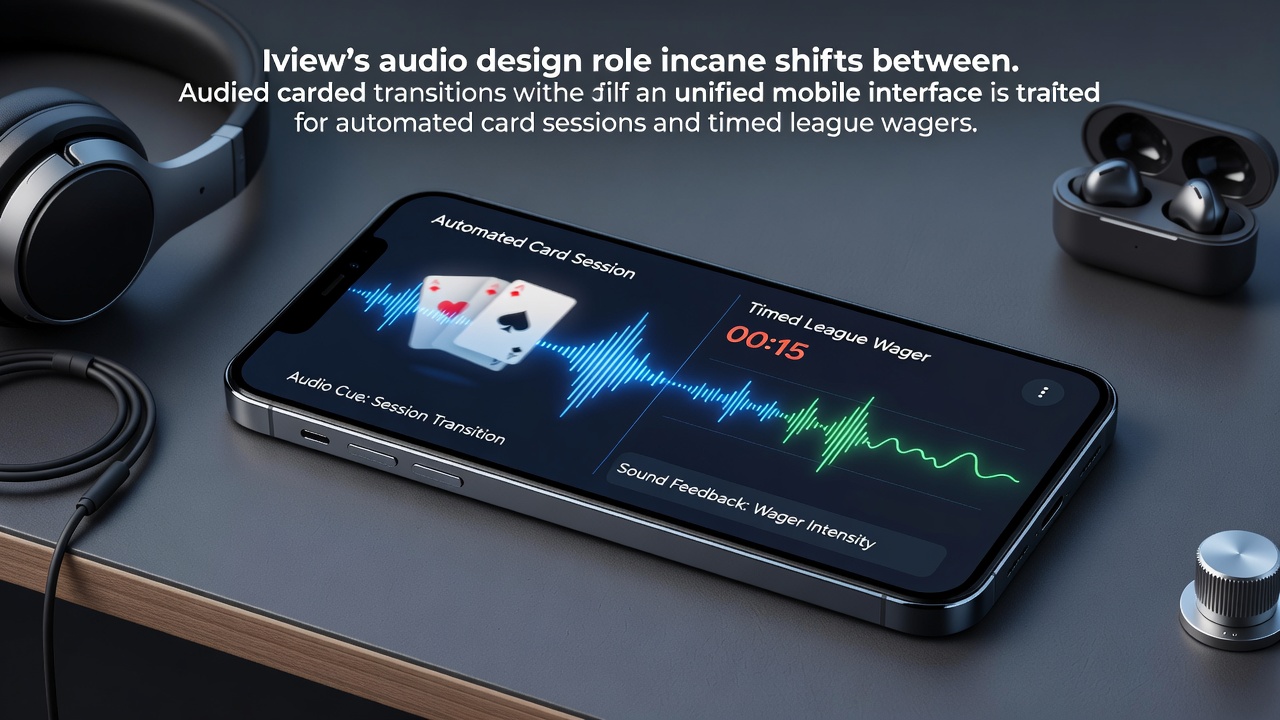
Audio cues in unified mobile gambling platforms direct players from automated card sessions into timed league wagers through layered sound signals that mark mode changes, session timers, and risk thresholds. These elements operate inside single applications where card automation runs alongside live betting markets, and developers rely on frequency shifts, volume modulation, and spatial audio to reduce friction during switches.
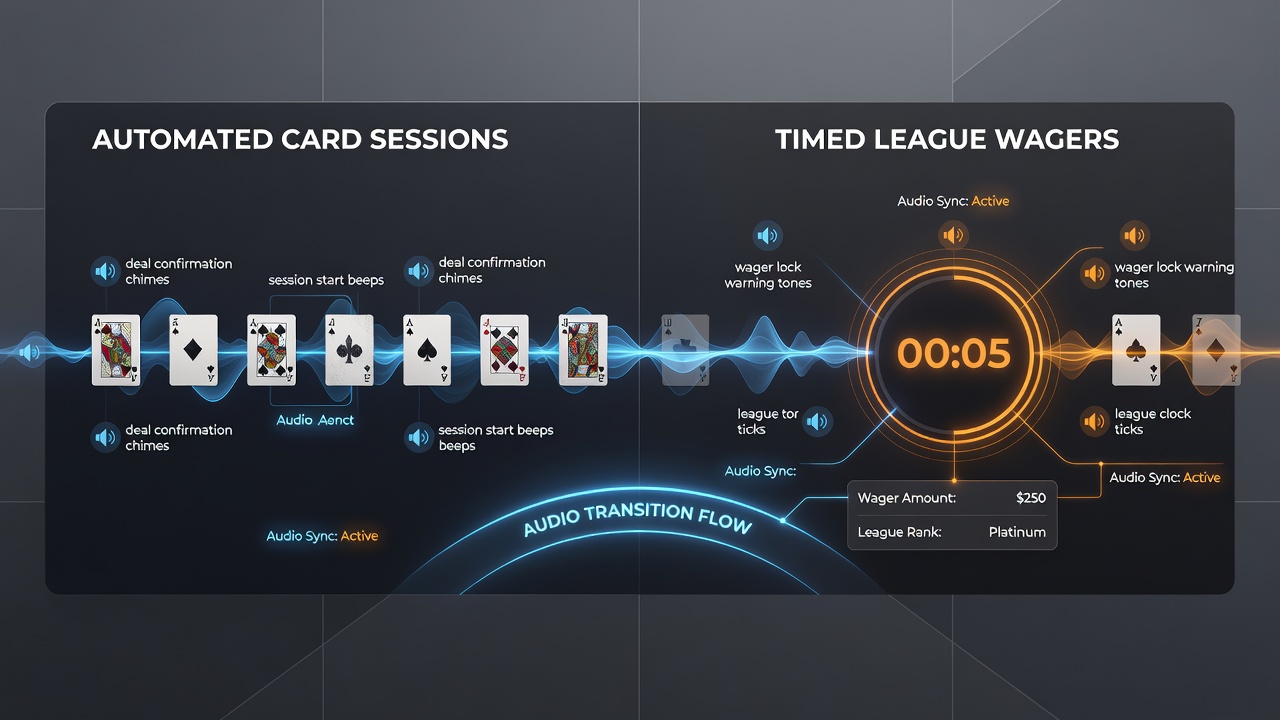
Platform data collected through 2025 and into August 2026 shows that users complete transitions faster when distinct audio markers precede visual prompts. Low-frequency pulses often signal the end of an automated card round, while ascending chimes introduce upcoming wager windows. Engineers calibrate these sounds against user retention metrics so that the same audio layer can either extend play in one mode or nudge movement into another without requiring menu navigation.
Core Audio Components in Transition Logic
Design teams segment audio into three functional layers that activate sequentially. The first layer consists of continuous ambient tracks that maintain engagement during automated card sequences, typically featuring steady rhythms between 60 and 80 beats per minute. When a league wager timer approaches, a second layer overlays short, high-pitched tones that increase in repetition rate. The third layer introduces directional panning through stereo output, moving sound from left to right channel to indicate that a wager interface has become active on the right side of the screen.
Research conducted by the University of Nevada, Las Vegas Gaming Innovation Lab examined 12 mobile platforms and recorded that transition completion rates rose by 23 percent when stereo panning accompanied timer alerts compared with mono tones alone. Those same recordings revealed that abrupt volume spikes above 75 decibels correlated with higher session abandonment, prompting developers to favor gradual crescendos instead.
Timing Synchronization With League Structures
Timed league wagers operate on fixed intervals that differ from the continuous loops of automated card sessions. Audio systems align notification sounds with these intervals by embedding countdown ticks that begin 45 seconds before each wager opens. The ticks accelerate from one per second to four per second in the final 10 seconds, then resolve into a single confirmation tone once the wager locks. This pattern repeats across football, basketball, and esports markets without requiring separate sound files for each sport.
Because automated card sessions pause rather than end during these windows, background music ducks by 12 decibels while the countdown plays. The ducking effect preserves continuity for players who choose to ignore the wager and resume card automation immediately afterward. Observers note that platforms updated in August 2026 refined ducking curves further, shortening the return-to-full-volume ramp to 1.8 seconds to match faster league cycles.
Device-Level Adaptations and Accessibility
Mobile operating systems expose haptic and audio APIs that platforms use to reinforce transitions. When a device detects headphones, spatial audio widens the perceived distance between card-session ambience and wager alerts. On speaker output, the same information compresses into mono with boosted mid-range frequencies to cut through ambient noise. Accessibility settings allow users to substitute visual flashes for audio cues or to lengthen the interval between countdown ticks.
Figures released by the Nevada Gaming Control Board in mid-2026 indicated that 14 percent of active accounts had enabled alternative audio profiles. Those profiles maintained the same transition logic but altered timbre and tempo, demonstrating that core design principles remain effective across varied hearing preferences.
Integration With Cross-Platform Promotion Triggers
Promotional events that link card play to league wagers often activate additional audio layers. A bonus multiplier attached to a football parlay may trigger a brief ascending arpeggio that interrupts the card-session track. The arpeggio resolves into a voice prompt stating the remaining time to claim the multiplier. Data from integrated platforms shows these combined audio-promotion signals increase cross-mode engagement by measurable margins when the voice prompt lasts under three seconds.
Engineers coordinate these sounds with backend timers so that the audio event never precedes the actual availability of the wager. Misalignment between sound and interface state produces measurable drops in conversion, which is why synchronization protocols now include checksum verification before any audio file loads.
Conclusion
Audio design in unified mobile interfaces functions as a navigational system that marks boundaries between automated card automation and timed league wagers. Frequency shifts, spatial positioning, and synchronized countdowns supply consistent cues that platforms refine through ongoing performance data. As league structures evolve and card automation incorporates new mechanics, audio layers continue to adapt while preserving the same core transition grammar across devices and user settings.